
After a hospitalization, I’m paying more attention to lab results and readings
A number of medications have also been adjusted since my time in the hospital
Written by |

Note: This column describes the author’s own experiences with various medications. Not everyone will have the same response to treatment. Consult your doctor before starting or stopping a therapy.
What do you do while you wait for your current condition to improve? Over the past couple of weeks, I’ve noticed I’m paying closer attention to even the most routine labs, especially as I await the results of a recent ultrasound.
When I was diagnosed with idiopathic pulmonary fibrosis (IPF) in January 2017, my blood labs totaled just a couple of tubes during annual physicals. Afterward, I achieved 29 tubes of blood in a single draw, a personal best.
Still, I paid little attention to the lab results during my pulmonary fibrosis journey, with a few exceptions, such as when I was being evaluated for a lung transplant and wanted to ensure there were no issues with me receiving one.

Making changes
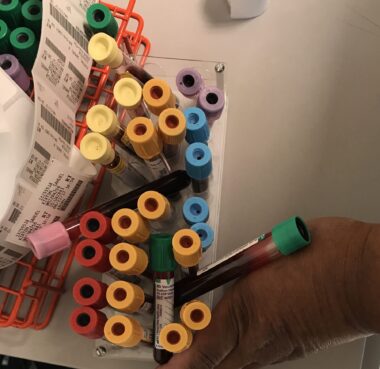
A view of the number of vials during a recent blood draw for columnist Sam Kirton. (Photo by Sam Kirton)
Now, more than five years after my bilateral lung transplant, I’m once again following my labs and results much more closely.
Each morning, I measure my weight and blood pressure before having my coffee. My care team wants me to increase my potassium intake, so I’ve added a banana to my coffee and yogurt.
I’m also taking regular home spirometry readings to identify any changes, especially if the results begin to trend negative. I’d become complacent about doing this at home, and was just relying on spirometry testing in the clinic, but that’s not enough.
Labs are now being drawn once a week. I’ve added eight additional medications following my recent hospitalization for shingles and paused a number of others, including some anti-rejection medications.
Other adjustments my team continues to follow after my hospitalization include reducing my dose of torsemide, a diuretic; adding acyclovir, an antiviral medication used for shingles; and replacing baby aspirin with Eliquis (apixaban), a blood thinner. Tamsulosin, which treats an enlarged prostate gland, was also adjusted.
I’m also monitoring my blood pressure. I’ve been treated for high blood pressure for more than 20 years, but it was 72/53 mmHg in the emergency department on June 22. This was one of the issues my care team addressed, along with the shingles, and my longtime blood pressure medications, losartan and carvedilol, have been replaced with eplerenone.
After my hospital stay, my endocrinologist ordered a blood test to look at my parathyroid hormone (PTH) levels, which were abnormally high, so my Forteo (teriparatide) injections — which I’ve taken daily for more than a year to improve my bone density — were stopped. The risk to my kidneys, as indicated by the high PTH score, outweighed any bone density benefit.
Medication changes are common during the post-transplant journey. When I was discharged from the hospital after my transplant, I began tracking every medication, what changes were made, who made the change, and the date. So far, there have been 170 medication changes, including those above.
Foot drop remains an issue, and many of these adjustments are intended to help my foot heal. I continue to have a high degree of confidence in my care team, and all the specialties (transplant, cardiac, nephrology, and endocrinology) continue to coordinate on my care. I continue, meanwhile, to make every breath count.
Note: Pulmonary Fibrosis News is strictly a news and information website about the disease. It does not provide medical advice, diagnosis, or treatment. This content is not intended to be a substitute for professional medical advice, diagnosis, or treatment. Always seek the advice of your physician or other qualified health provider with any questions you may have regarding a medical condition. Never disregard professional medical advice or delay in seeking it because of something you have read on this website. The opinions expressed in this column are not those of Pulmonary Fibrosis News or its parent company, Bionews, and are intended to spark discussion about issues pertaining to pulmonary fibrosis.


Leave a comment
Fill in the required fields to post. Your email address will not be published.