
Jascayd (nerandomilast) for pulmonary fibrosis
 Fact-checked by
 What is Jascayd for pulmonary fibrosis?
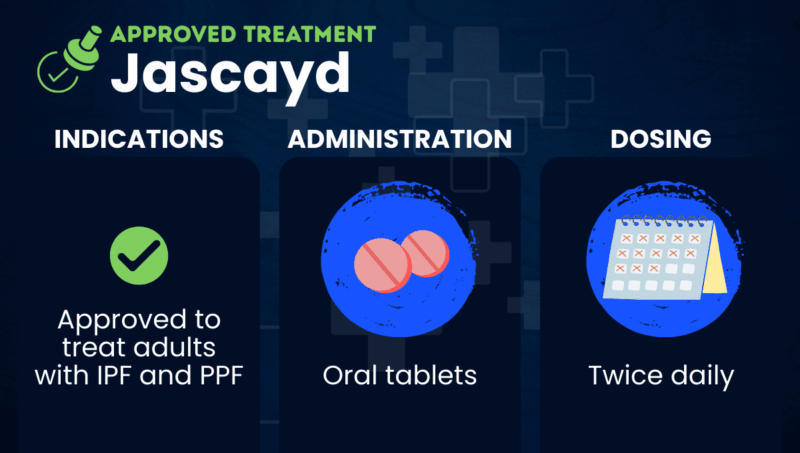
Jascayd (nerandomilast) is an approved oral therapy that’s intended to slow lung function decline in adults with idiopathic pulmonary fibrosis (IPF) and progressive pulmonary fibrosis (PPF).
Pulmonary fibrosis is a chronic disease marked by scarring, or fibrosis, and inflammation in the lungs. It makes it harder for oxygen to reach the bloodstream, leading to symptoms that may include cough and shortness of breath. In IPF, the most common form of pulmonary fibrosis, the underlying causes of the disease aren’t known. PPF comprises lung diseases other than IPF that are characterized by inflammation and fibrosis that progressively worsen over time.
Jascayd is designed to reduce disease-driving inflammation and fibrosis in IPF and PPF by blocking the activity of an inflammatory enzyme called phosphodiesterase 4B (PDE4B). This, in turn, may help slow lung function decline.
Available as oral tablets that can be swallowed whole or dispersed in water, Jascayd is the first and only preferential inhibitor of PDE4B to be approved for IPF and PPF. It was developed by Boehringer Ingelheim.
Therapy snapshot
| Brand name | Jascayd |
| Chemical name | Nerandomilast |
| Usage | Used to slow lung function decline in adults with idiopathic and progressive pulmonary fibrosis |
| Administration | Oral tablets |
Who can take Jascayd?
Jascayd is approved in the U.S. as a treatment for adults with IPF and PPF.
While its prescribing information lists no contraindications, Jascayd should not be taken alongside medications that increase the activity of CYP3A, the enzyme that processes Jascayd in the body.
How is Jascayd administered?
Jascayd is available as film-coated tablets in doses of 9 and 18 mg. Patients may swallow the tablets whole or disperse them in water.
The recommended dosage is 18 mg taken twice daily, approximately 12 hours apart, with or without food. Individuals who experience intolerable side effects may take lower doses (9 mg twice daily), unless they are also taking the approved IPF medication pirfenidone (sold as Esbriet and generics). The same lower dose regimen is also recommended for patients taking Jascayd alongside strong CYP3A inhibitors.
Jascayd in clinical trials
Jascayd’s approvals in the U.S. were based on data from clinical testing.
Two trials tested the medication for people with IPF:
- A Phase 2 study (NCT04419506), completed in 2021, involved 147 adults with IPF and tested Jascayd against a placebo. The results showed that, after three months, the therapy outperformed the placebo in its ability to slow the decline of forced vital capacity (FVC), a common measure of lung function that assesses how much air a person can forcibly exhale after a deep breath.
- A Phase 3 study called FIBRONEER-IPF (NCT05321069), completed in 2024, evaluated Jascayd versus a placebo in 1,177 adults with IPF. Most participants were also receiving other approved antifibrotic IPF therapies (pirfenidone or nintedanib, which is sold as Ofev). The results showed that Jascayd was significantly better than the placebo in slowing FVC decline after a year of treatment. Data also indicated that Jascayd reduced the risk of death among IPF patients. The findings were generally comparable in individuals who were or were not taking other IPF treatments. Participants taking pirfenidone and the lowest 9 mg dose of Jascayd were the only ones who did not see significant benefits from treatment.
An additional Phase 3 clinical trial called FIBRONEER-ILD (NCT05321082) supported the medication’s approval for PPF. That study assessed the safety and efficacy of the Jascayd against a placebo in more than 1,000 adults with PPF. Similar to findings from FIBRONEER-IPF, the results from this trial indicated that Jascayd was able to slow FVC decline and reduce the risk of death in these patients.
Jascayd side effects
The most common side effects of Jascayd are:
- diarrhea
- COVID-19
- upper respiratory tract infection
- depression
- weight loss
- decreased appetite
- nausea
- fatigue
- headache
- vomiting
- back pain
- dizziness
The medication’s prescribing information lists no other warnings or precautions related to the use of Jascayd. In clinical trials, side effects were similar for participants with IPF and PPF.
Pulmonary Fibrosis News is strictly a news and information website about the disease. It does not provide medical advice, diagnosis, or treatment. This content is not intended to be a substitute for professional medical advice, diagnosis, or treatment. Always seek the advice of your physician or other qualified health provider with any questions you may have regarding a medical condition. Never disregard professional medical advice or delay in seeking it because of something you have read on this website.