LTI-03 for pulmonary fibrosis
 Fact-checked by
 What is LTI-03 for pulmonary fibrosis?
LTI-03 is an experimental inhaled therapy that’s being tested as a possible treatment to preserve lung function and slow disease progression in idiopathic pulmonary fibrosis (IPF).
In IPF, the most common type of pulmonary fibrosis, progressive inflammation and scarring (fibrosis) in the lungs disrupt breathing. Scientists don’t entirely understand the causes of IPF, but evidence suggests that scarring is linked to the abnormal activity of cells called fibroblasts. Fibroblasts normally help heal wounds, but they may become overly active in the lungs of people with IPF, promoting the formation of scar tissue.
LTI-03 is designed to inhibit fibrosis and protect progenitor cells in the lungs that play a key role in tissue repair and regeneration. The investigational therapy is derived from caveolin-1 (Cav1), a protein that normally regulates processes involved in fibrosis and lung cell repair. By mimicking the activity of Cav1, LTI-03 is expected to bring these processes back into balance. Researchers believe this could help reduce scarring and improve lung cell health.
Rein Therapeutics is developing LTI-03 as a dry powder that patients inhale directly into the lungs. The company is currently sponsoring a Phase 2 trial that’s testing LTI-03 in adults with IPF.
LTI-03 has received orphan drug designation — a regulatory status that incentivizes the development and regulatory review of therapies for rare diseases — for IPF in the U.S. and the European Union.
Therapy snapshot
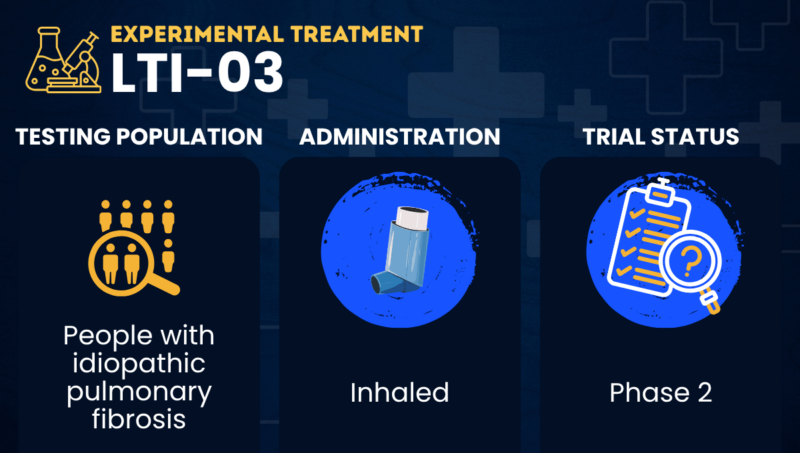
| Treatment name | LTI-03 |
| Administration | Inhaled dry powder |
| Clinical testing | Currently in Phase 2 testing |
How will LTI-03 be administered in pulmonary fibrosis?
In an ongoing Phase 2 clinical trial, people with IPF are receiving LTI-03 as powder-filled capsules for inhalation. They self-administer the therapy using a dry powder inhaler twice a day. The trial is testing multiple dose strengths, and the recommended dose hasn’t yet been established.
LTI-03 in pulmonary fibrosis clinical trials
After a Phase 1a trial (NCT04233814) involving healthy volunteers showed that LTI-03 was safe and well-tolerated at doses of 2.5 mg and 10 mg, Rein began studies in IPF participants.
The company sponsored a Phase 1b trial (NCT05954988) that enrolled 24 adults, ages 40 and older, with newly diagnosed IPF who hadn’t previously received antifibrotic treatment. Participants were assigned to receive either a placebo or one of two doses (2.5 mg or 5 mg) of LTI-03 twice daily for two weeks. Results showed that:
- Compared with patients in the placebo group, those in the treatment groups showed significant decreases in four fibrosis biomarkers. For three of these markers, the effect was significantly more pronounced in the higher dosage group.
- A biomarker of poor lung cell health decreased by 5% in the higher dosage group, indicating improved cell health. This was comparable to the decrease seen in a separate clinical trial of the approved IPF medication Ofev (nintedanib) over a longer treatment period (about three months).
Based on these findings, Rein initiated the Phase 2 RENEW study (NCT06968845). RENEW will enroll more patients with IPF, including those who have previously received other treatments. Similar to the Phase 1b trial, participants will self-administer a placebo or one of two LTI-03 doses (2.5 mg or 5 mg) twice daily for 24 weeks (nearly six months). The study’s main goal is to assess LTI-03’s safety and tolerability. Changes in lung function and the extent of fibrosis before and after treatment will also be evaluated as secondary goals.
LTI-03 side effects
Rein has reported that LTI-03 was safe and well tolerated, but data for people with IPF are currently limited. In a Phase 1b study involving people with IPF, cough was the most common side effect and the only one observed in more than one person.
Pulmonary Fibrosis News is strictly a news and information website about the disease. It does not provide medical advice, diagnosis, or treatment. This content is not intended to be a substitute for professional medical advice, diagnosis, or treatment. Always seek the advice of your physician or other qualified health provider with any questions you may have regarding a medical condition. Never disregard professional medical advice or delay in seeking it because of something you have read on this website.