
CT scans help in predicting long-term outcomes with IPF drug
Imaging changes over first year indicate likelihood of lung transplant, death
Written by |
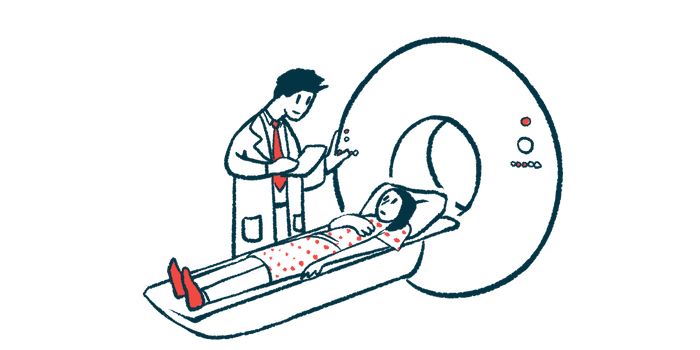
Analyses of CT scans over the course of one year can help to predict long-term outcomes among people with idiopathic pulmonary fibrosis (IPF) who are taking pirfenidone, marketed in the U.S. as Esbriet and also available as generics.
Changes in these imaging scan data were found to be “significant prognostic predictors” of the need for a lung transplant, later declines in lung function, and death in individuals with lung scarring, or fibrosis, treated with the oral medication, according to researchers.
Those are the findings of a new study by scientists in South Korea that used deep learning-based quantification — analyses done with a computer — of lung imaging scans to assess the extent of fibrosis among IPF patients in the year after starting pirfenidone. With deep learning, a computer is trained to recognize patterns across large amounts of data.
“CT quantification changes after 1 year of pirfenidone treatment demonstrated prognostic value in patients with IPF, predicting all-cause mortality or lung transplantation as well as subsequent lung function decline,” the researchers wrote.
Titled “Deep learning-based quantification of CT changes after 1 year of pirfenidone treatment as a prognostic marker in idiopathic pulmonary fibrosis,” the study was published in the journal Insights into Imaging.
IPF is a respiratory system disease marked by fibrosis of the lungs. Such scarring is progressive, or gets worse over time — but the rate at which IPF progresses can vary substantially from person to person. Moreover, it’s often difficult to predict how quickly the disease will progress in the future.
Pirfenidone is an approved IPF treatment that was shown in clinical trials to help slow lung fibrosis. However, clinical trials usually only last about a year, and there aren’t established prognostic tools to help predict long-term outcomes for people with IPF who are prescribed the therapy.
Multiple CT scans more accurate than just 1
CT scans, which use a series of X-rays to view structures within the body, are routinely used to help track IPF progression. In this study, the research team assessed whether data from CT scans collected during the first year of treatment might help predict long-term outcomes from IPF patients taking pirfenidone.
“Despite the proven efficacy of antifibrotic agents in slowing lung function decline in patients with IPF, disease progression and mortality continue to occur unpredictably beyond 1 year of treatment — outside the landmark periods typically evaluated in major clinical trials. To address this gap, we evaluated the prognostic value of changes in [CT scan measures] of normal lung and fibrosis extents in patients with IPF who completed at least 1 year of pirfenidone therapy,” the researchers wrote.
The analysis involved data from more than 400 people with IPF who started on pirfenidone at one of two hospitals in the Asian nation between 2009 and 2022. The patients had a mean age of 69.8.
Using deep learning techniques, the researchers measured the amount of both healthy lung tissue and fibrotic lung tissue visible on CT scans during the first year. Then, the team used statistical analyses to see if these CT-based measures were significantly linked with the risk of death or lung transplant over a median follow-up of almost four years.
The results showed that CT-based measures were indeed significantly linked with the risk of death or lung transplant. Specifically, every 5% increase in preserved healthy lung tissue was associated with a 10% lower risk of death or transplant. Meanwhile, each 5% increase in fibrosis was linked to a 16% higher risk of this outcome.
More fibrosis in the first year was also associated with a higher likelihood of experiencing a substantial decrease in lung function over the long term, the data showed.
The researchers noted that analyses of multiple CT scans taken over the course of the year showed better accuracy for predicting long-term outcomes than CT scans taken at a single point in time.
“These findings suggest that temporal changes in CT quantification provide incremental prognostic information beyond static measurements by capturing the patient’s evolving disease status,” the team wrote.
Among the study’s limitations, the scientists noted its retrospective design and the small number of patients in certain subgroups. The team stressed that “further validation in independent, prospective cohorts is essential before clinical application.”



Leave a comment
Fill in the required fields to post. Your email address will not be published.