
Inhaled IPF treatment shows early promise for lung function
Phase 2 trial of Rein's LTI-03 now 75% enrolled; recruitment continues in U.S., Europe
Written by |

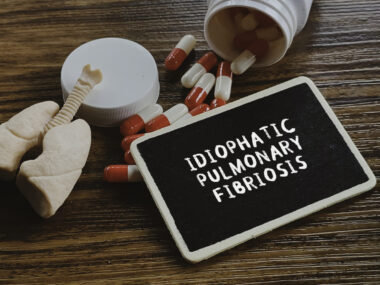
Rein Therapeutics' inhaled IPF treatment showed encouraging early data in a clinical trial. (Photo by iStock)
Early data from a Phase 2 clinical trial testing an experimental inhaled treatment for idiopathic pulmonary fibrosis (IPF) against a placebo showed improvements in lung function in about one-third of participants after 12 weeks, according to the treatment’s developer, Rein Therapeutics.
However, the findings include people receiving either the treatment, LTI-03, or a placebo, and researchers do not yet know which each participant received, so they can’t say whether LTI-03 is responsible for the observed improvements. Preliminary safety data were encouraging, with most reported side effects mild or moderate.
“As we continue to enroll patients in the study, today’s blinded look at the data shows encouraging lung function trends and a favorable safety and tolerability profile across the study population,” Brian Windsor, PhD, Rein’s president and CEO, said in a company press release.
Enrollment in the Phase 2 trial, RENEW (NCT06968845), is progressing ahead of schedule, with 75% of the planned participants already enrolled, the company said. Recruitment of IPF patients, ages 40 and older, is ongoing at sites in U.S., U.K., Australia, Germany, Poland, Bulgaria, and Romania.
Rein expects to release the trial’s main results in 2027, when the data will be unblinded — meaning researchers will know which participants received LTI-03 and which received the placebo, allowing them to better assess the treatment’s safety and effects on lung function.

Earlier studies promising
IPF, a type of pulmonary fibrosis (PF) with no known cause, is marked by progressive scarring (fibrosis) in the lungs. As scar tissue builds, the lungs stiffen and their ability to expand lessens, making breathing increasingly difficult.
LTI-03 contains a portion of caveolin-1 (Cav1), a protein whose levels are reduced in the lungs of people with IPF and that helps regulate wound healing and scar formation. By restoring Cav1 activity, LTI-03 aims to influence several molecular pathways involved in lung scarring and help preserve lung function.
Preclinical studies suggested that LTI-03 could help reduce inflammation and scarring in lung tissue collected from people with IPF. The therapy also reduced markers of fibrosis in people newly diagnosed with IPF who participated in a Phase 1 trial (NCT05954988).
RENEW began recruiting participants last year, but its progress was interrupted by a full clinical hold imposed by the U.S. Food and Drug Administration. The agency lifted the hold after Rein addressed the agency’s concerns, allowing the trial to begin dosing participants earlier this year.
The study aims to enroll up to 120 adults with IPF, who are randomly assigned to receive one of two doses of LTI-03 or a placebo, administered twice daily through a dry powder inhaler for about six months. Its main goal is to assess LTI-03’s safety and tolerability, with additional assessments including its effects on lung function.
Rein said that as of November, 90 participants had been assigned to treatment across sites in the U.S., U.K., Australia, Germany, and Poland.
The preliminary analysis included blinded data from 24 participants whose lung function had been measured at the start of the study and after 12 weeks, or about three months. Lung function was assessed using forced vital capacity (FVC), a measure of how much air a person can forcibly breathe out after taking a deep breath. FVC typically declines as IPF progresses.
After three months, eight participants (33%) showed an improvement in FVC, while 11 (46%) experienced a decline of no more than 5.7%. The remaining five participants (21%) had a decline greater than 5.7%.
The 5.7% cutoff comes from earlier research linking larger declines in FVC over three months to a higher risk of death in people with IPF. Rein cautioned that the cutoff was used only to describe the preliminary findings and cannot predict outcomes for individual RENEW participants.
Preliminary safety findings were also encouraging, according to Rein. Most reported adverse events were mild or moderate, with cough being the most common and generally mild in severity. No serious adverse events were considered related to study treatment. Most enrolled participants (92%) also remained in the trial or had completed it.
“The improvements in FVC from baseline observed in 33% of evaluable patients is particularly encouraging, as improvements in lung function are not expected in this patient population,” said Cory Hogaboam, PhD, Rein’s chief scientific officer. “While the study remains blinded, these observations collectively strengthen our belief that LTI-03 has the potential to transform the treatment landscape for IPF.”


Leave a comment
Fill in the required fields to post. Your email address will not be published.